Goldman Sachs ex-banker Asante Kwako Berko has been convicted by a federal jury over a scheme to bribe Ghanaian officials in connection with the development and financing of a power plant project in Ghana.
Berko, a dual U.S.-Ghanaian citizen and former Executive Director in Goldman Sachs’ Investment Banking Division, was found guilty of conspiracy to violate the Foreign Corrupt Practices Act, substantive FCPA violations and money laundering conspiracy.
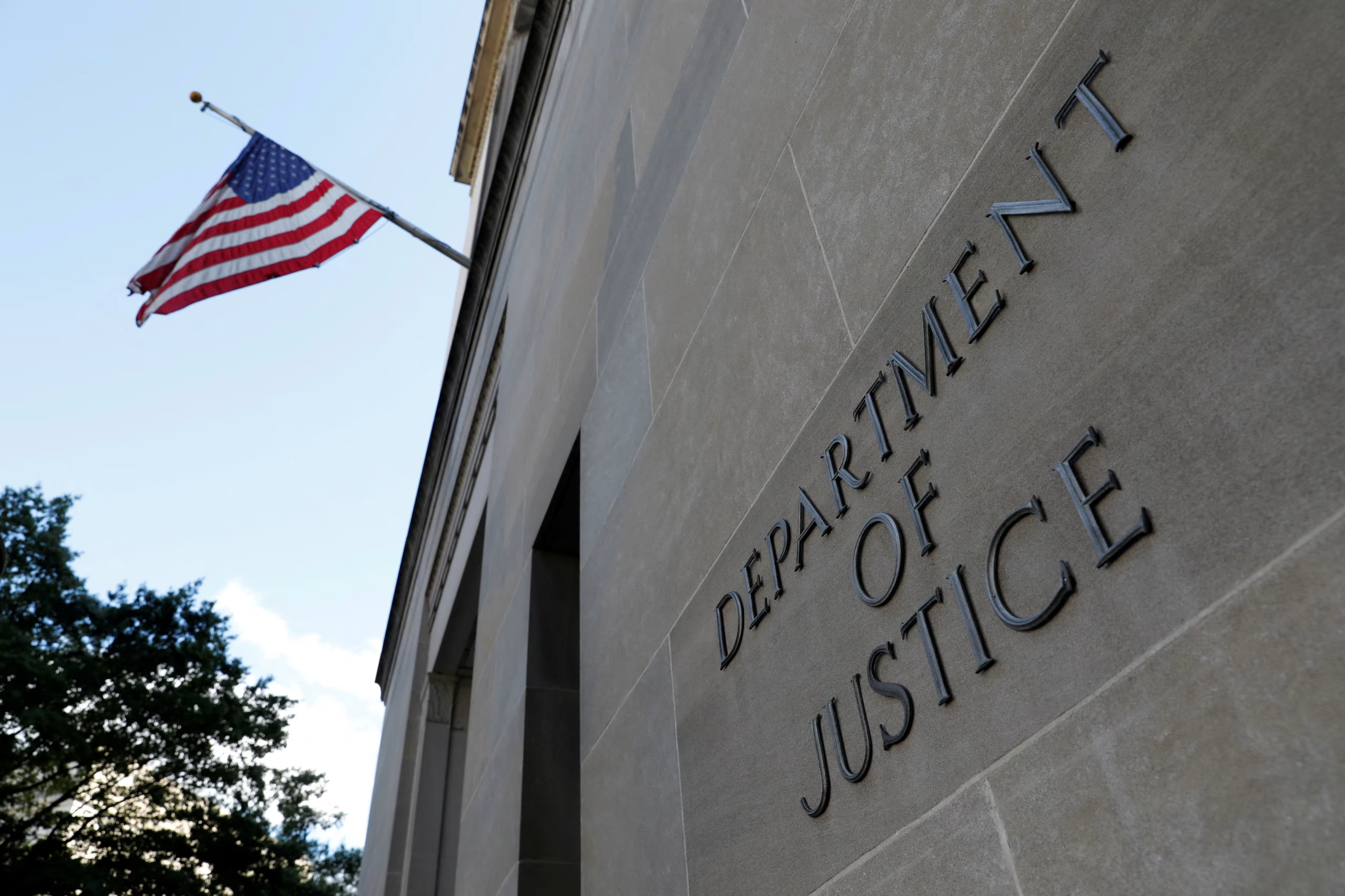
The U.S. Department of Justice said Berko conspired to pay more than $1 million in bribes to Ghanaian government officials in connection with a power plant expected to generate hundreds of millions of dollars in revenue.
The case centred on a transaction involving Turkish energy company Aksa Enerji, then a Goldman Sachs client, and the Republic of Ghana. Beginning in December 2014, Berko was responsible for securing and managing the deal. Prosecutors said he and his co-conspirators sought to influence officials at several levels of the Ghanaian government, including discussions in April 2015 about paying $1 million to the country’s Minister of Power.
Evidence presented at trial also showed that five Ghanaian officials each received $5,000 during an all-expenses-paid trip to Turkey. Ghana’s parliament ratified the power plant deal in July 2015. According to the Justice Department, Berko concealed the conduct from Goldman Sachs’ compliance team and used a personal email account when discussing bribes.
Berko and his co-conspirators also concealed and laundered payments through shell companies, sham invoices, nominee account holders and cash withdrawals. Goldman Sachs ultimately withdrew from the deal because of corruption concerns.
The conviction highlights the exposure that can arise for solicitors and in-house counsel before an international transaction reaches completion. Transactional lawyers advising banks, infrastructure investors and multinational businesses may need to examine the conduct of employees, intermediaries and local counterparties alongside contractual and financial due diligence.
Barristers may also be instructed where evidential, extradition or proceeds-of-crime issues arise, while law firm management must ensure cross-border teams can identify and escalate potential compliance concerns.
The prosecution involved authorities across several jurisdictions. The FBI investigated the case, while the Justice Department’s Office of International Affairs worked with the Office of the Attorney-General of Ghana and Ghana’s Office of the Special Prosecutor.
The UK’s National Extradition Unit, Crown Prosecution Service of England and Wales, U.S. Embassy in London and U.S. Marshals Service assisted with Berko’s arrest and extradition.
Berko is due to be sentenced on November 10 and faces a maximum penalty of 30 years in prison. The Justice Department’s Fraud Section is responsible for investigating and prosecuting FCPA and Foreign Extortion Prevention Act matters, leaving law firms and corporate legal teams with another enforcement example to consider when assessing anti-bribery controls around international financing and infrastructure transactions.